
Student Housing Report exposes the State of Mississauga’s Student Housing Crisis
Dec 28 2025
By Fatima Nawaz
Edited by Sadaf Shaik
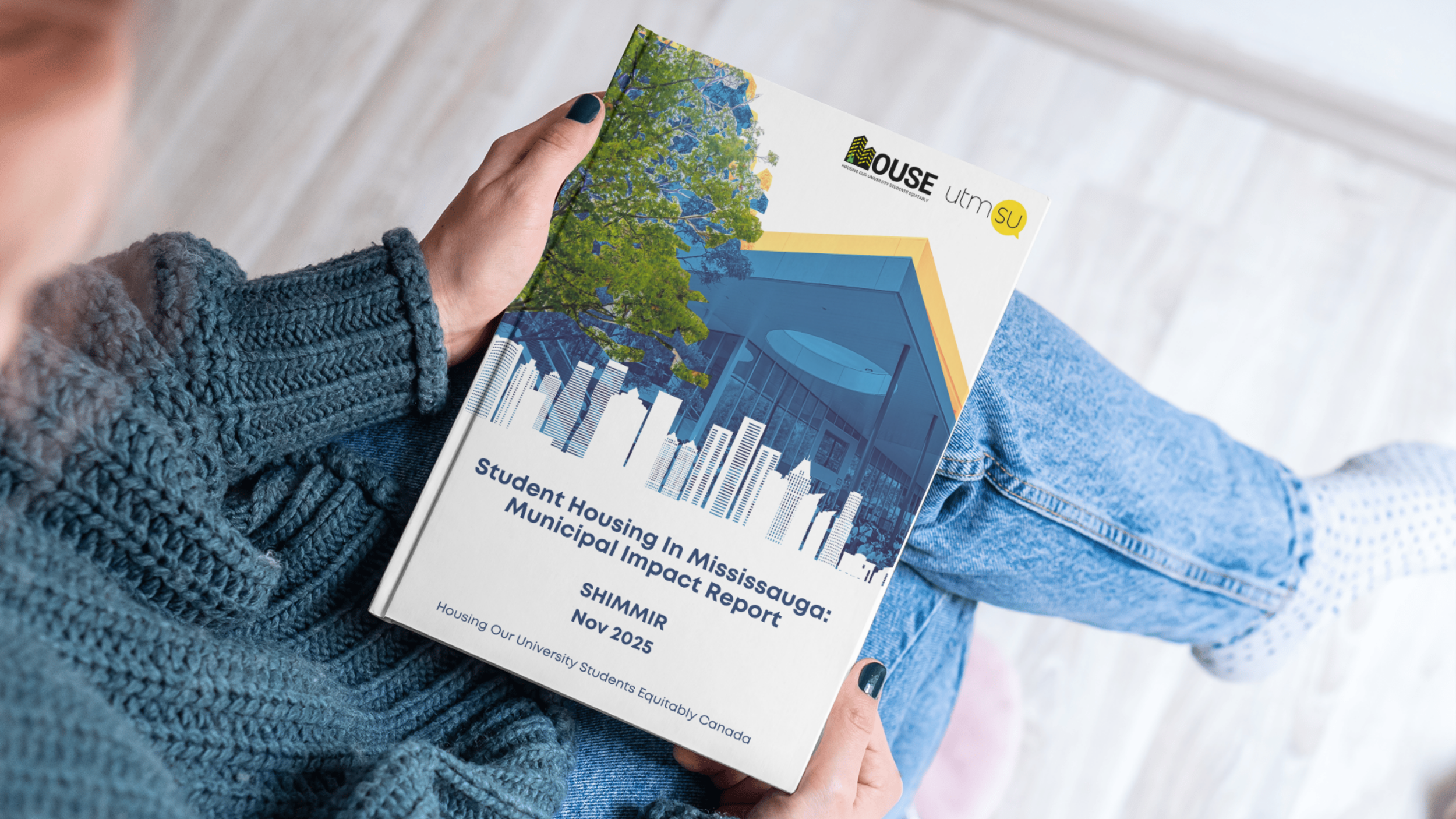
HOUSE Canada’s “Student Housing in Mississauga: Municipal Impact Report (SHIMMIR)”, in collaboration with the University of Toronto Mississauga Student Union (UTMSU), assesses the state of student housing at and around the University of Toronto Mississauga campus in response to growing concerns about housing supply shortages and limited student tenant protections.
Earlier this year, our preliminary findings revealed that most students report housing costs significantly impact their well-being and academic performance with longer commutes for over 40% and financial precarity being widespread with 22% and 32% respectively, of students receiving no financial aid from family and scholarships/grants. Now, SHIMMIR confirms and expands on many of the preliminary findings:
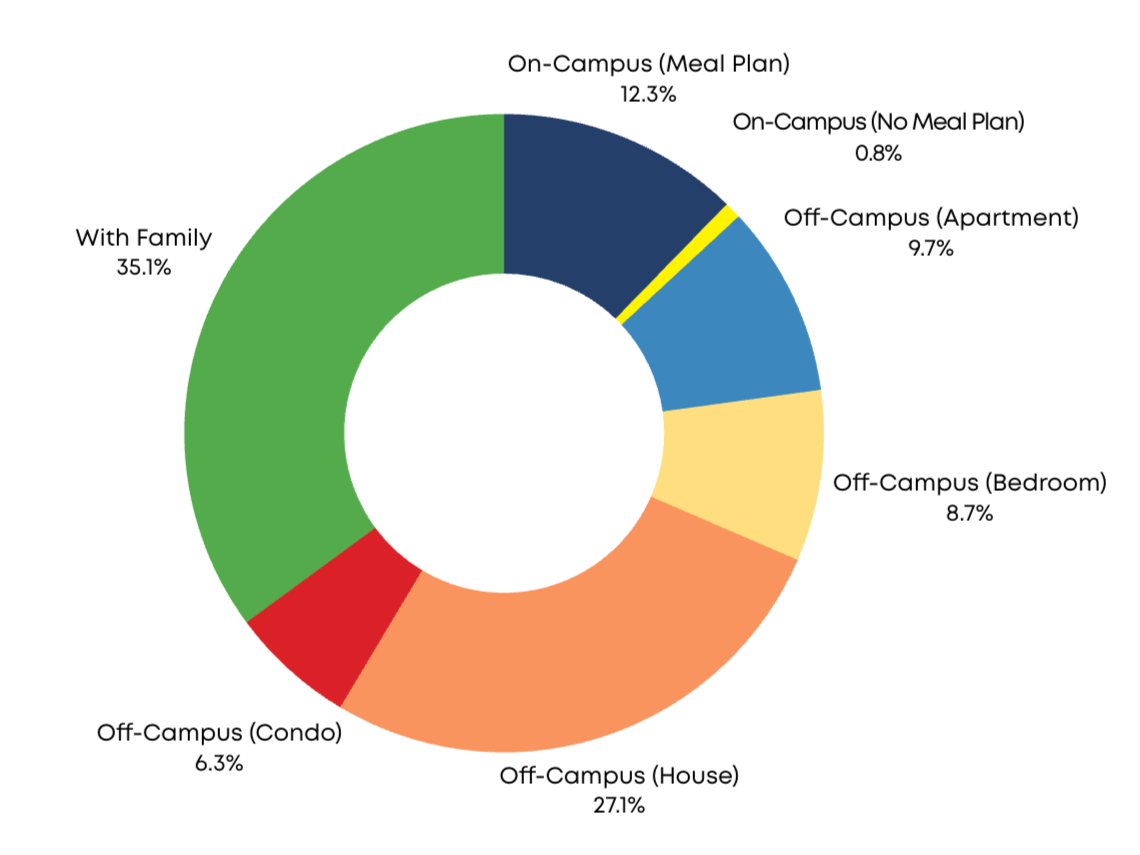
73% of students live in Peel Region, with most living off-campus, representing the largest group of renters (26%). This shows a higher concentration of housing demand near UTM and more reliance on off-campus housing, however, only few have access to legally recognized housing. Current Mississauga by-laws restrict multi-tenant houses to detached dwellings with strict room limits, excluding apartments and townhouses, which are the housing types most commonly rented by students.
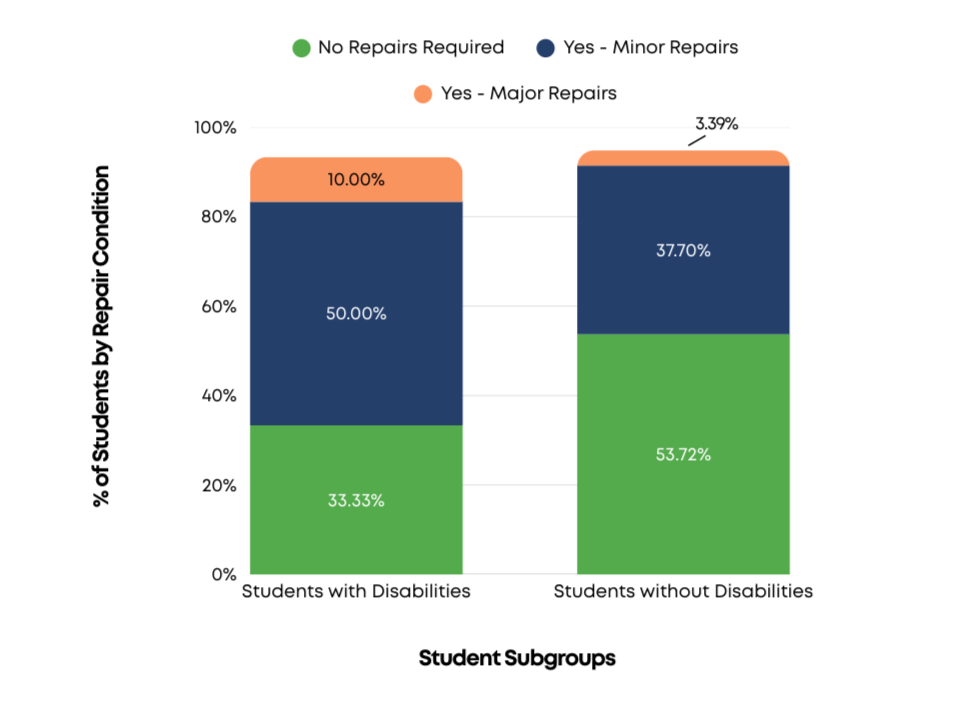
Students with disabilities and international students were more likely to report major repair issues (10% and 5.05%) than students without (3.4% and 3.88%) showing persistent inequalities in housing quality.
Similarly, international students often pay a 53% higher median rent ($1400) than domestic students ($915) for less quality.
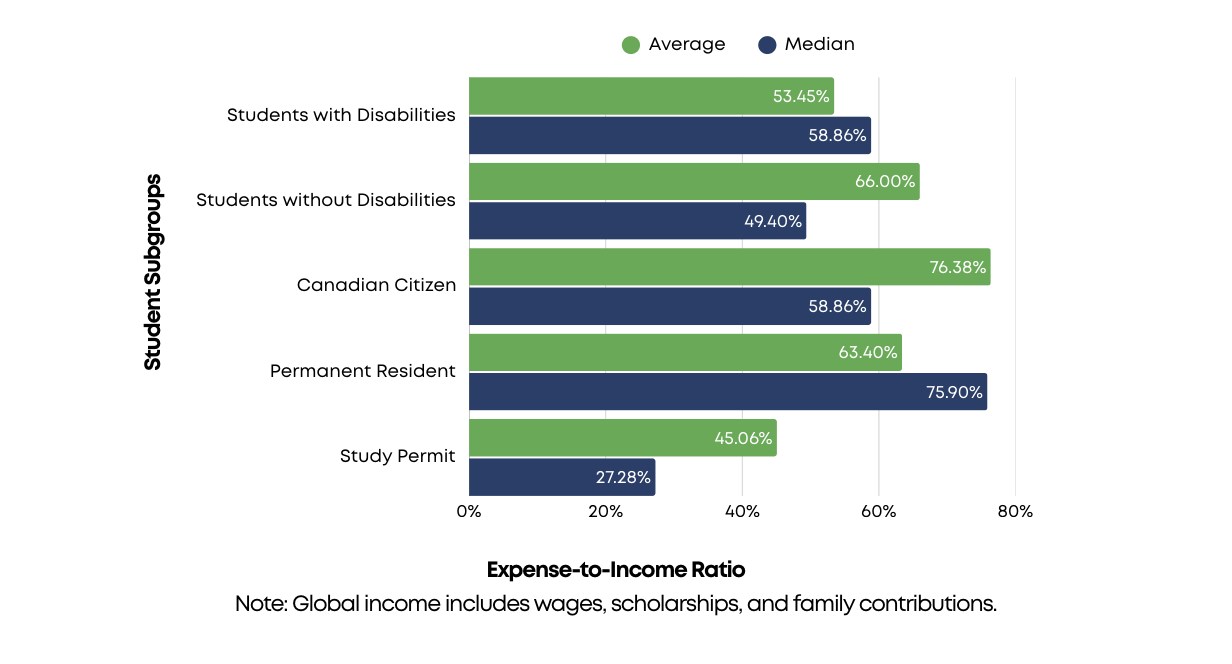
Housing and living costs for students earning under $10,000 exceeded income by nearly 20%. It is often only higher income students who can sustainably access Mississauga’s limited supply of housing.
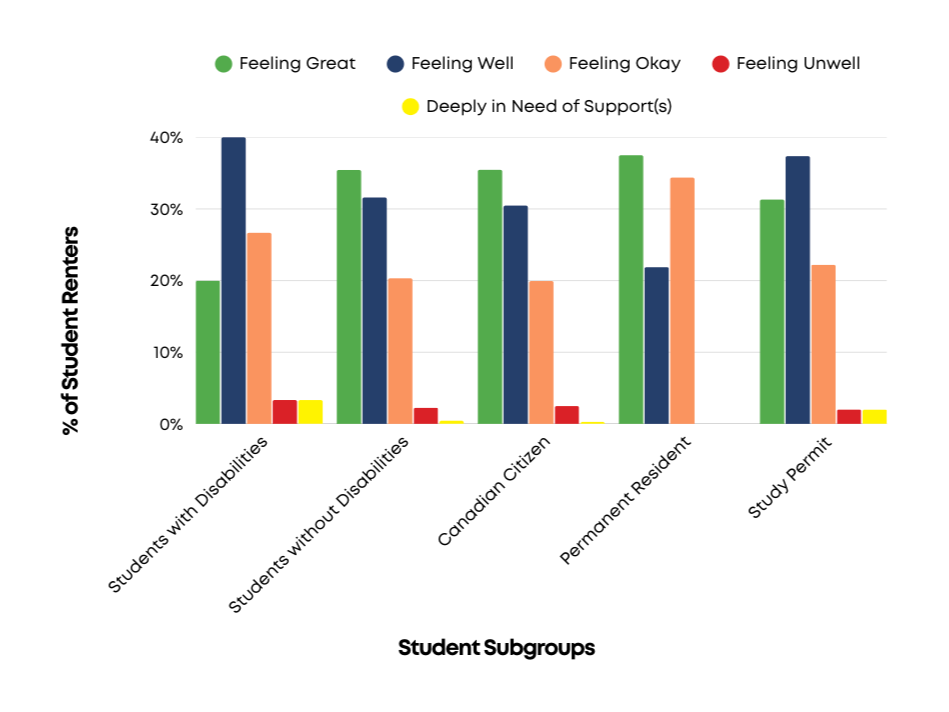
40% of all respondents reported a one-way commute exceeding 30 minutes making distance and travel time a major hidden cost of housing affordability.
The longest commutes fall on the lowest-income students with more than 40% earning less than $10,000.
A shocking 12% of students overall considered dropping out due to housing stress, which shows how access to housing is not just a resource issue, but also a student health & well-being issue that requires intervention. The research team conducted a mixed-methods study during the Spring and Summer of 2025, designed to prioritize the lived experiences of students, particularly those renting off-campus in and around the UTM area. A combination of in-person tabling and digital outreach was used to distribute surveys, which included both quantitative and qualitative questions.
Mississauga’s student housing crisis stems from a complex intersection of rapid urban development, restrictive housing regulations, and a growing post-secondary student population. The University of Toronto Mississauga (UTM) continues to attract both domestic and international students, yet the surrounding housing infrastructure has not adapted to meet this increasing demand. Many students are placed on waitlists to access on-campus housing causing anxiety over unguaranteed housing: “I didn’t have any housing and resorted to staying in a hotel and Airbnbs” (R.3). Addressing this crisis will require coordinated action by the university, city, and community to expand not just housing supply, but equity, dignity, and support systems.
The report concludes with a number of recommendations to improve access to safer, more affordable and accessible housing for UTM students:
Expanding multi-tenant housing restrictions to include semi-detached housing and townhouses near campus and considering performance-based standards over rigid room caps to enhance the quality of housing available to students.
Audit on-campus residence buildings regularly and prioritize AODA aligned retrofits (e.g., step-free access, visual alarms, accessible bathrooms, etc.)
Introduce tiered residence pricing, expand bursaries and instalment plans and improve waitlist transparencies and appeals.
Implement an emergency housing protocol with local partners (e.g., nonprofits, co-ops), following models, such as the downtown campus’ Campus Cooperative Residences.
Deliver tenant-rights workshops at orientation and expand access to legal assistance.
Establish a Student Housing Advisory Council with members of the UTM Student Union, equity seeking groups, UofT administration and City staff to allow for ongoing student input.
Expand direct and frequent transit access to the university to reduce long commutes that burden low-income students and students with disabilities.
To view the full SHIMMIR report, please visit our Research page.
About HOUSE
HOUSE is a non-profit committed to delivering safe and affordable housing on or near post-secondary campuses across Ontario. Founded by student advocates and governed through local student union chapters, HOUSE works to address the student housing crisis through research, advocacy, education, and by working with students unions and higher education institutions to raise capital required to create housing solutions by and for postsecondary students.
Email us at info@housecanada.org to learn more about our work or to get involved.